Planning Noise Control: What Happens Before Construction Starts In Singapore
In Singapore, construction noise is not something that is handled only once work begins on site. In fact, some of the most important decisions about noise control happen long before any machinery arrives. This early planning stage is where contractors, engineers, and consultants work together to reduce future disruption and ensure compliance with strict environmental standards.
Noise control in Singapore is treated as part of the overall project design rather than an afterthought. This approach helps avoid costly changes later and reduces the risk of complaints once construction is underway.
Understanding what happens during this pre-construction stage gives a clearer picture of why some projects manage noise far better than others.
Regulatory Requirements and Early Compliance Checks
One of the first steps in planning noise control in Singapore involves reviewing regulatory requirements. Construction activities must comply with guidelines set by relevant authorities, which outline acceptable noise levels depending on the time of day and type of work.
Before approval is granted, project teams often need to submit environmental management plans. These plans include expected noise levels, the types of equipment that will be used, and the mitigation measures that will be implemented.
This early compliance check ensures that potential issues are identified before work begins. It also encourages developers to think carefully about how their site will impact surrounding residential, commercial, or sensitive areas such as schools and hospitals.
Site Assessment and Environmental Review
Once regulatory expectations are clear, the next step is a detailed site assessment. This involves studying the surrounding environment to understand how noise is likely to travel.
Factors such as nearby buildings, road layouts, and open spaces all affect how sound behaves. For example, tall buildings can reflect noise and amplify it in certain directions, while open areas may allow sound to travel further than expected.
In Singapore’s dense urban environment, even small differences in layout can significantly influence noise impact. This is why environmental consultants often conduct modelling studies to predict how construction noise will spread under different scenarios.
The goal at this stage is simple: identify potential problem areas before they become real problems.
Selecting Equipment with Noise in Mind
Another important part of pre-construction planning is equipment selection. Not all machinery produces the same level of noise, and this difference can have a major impact on overall site conditions.
Where possible, contractors may choose modern equipment designed with quieter operation in mind. This includes generators with improved insulation, low-noise compressors, and machinery fitted with sound-dampening features.
In some cases, alternative construction methods may also be considered. For example, prefabrication techniques can reduce the amount of on-site work required, which in turn lowers noise levels during construction.
These decisions are made early because changing equipment later can be expensive and disruptive to project timelines.
Designing the Site Layout Strategically
Site layout planning plays a major role in noise control. Before construction begins, planners decide where key activities will take place, where machinery will be positioned, and how materials will move through the site.
The objective is to place the noisiest operations as far away as possible from sensitive boundaries. Buffer zones may also be created using storage areas or less disruptive activities positioned closer to neighbouring properties.
In Singapore, where construction sites are often surrounded by residential buildings, this type of planning is especially important. A well-designed layout can significantly reduce the amount of noise that reaches the public.
Planning Temporary Noise Barriers and Hoarding
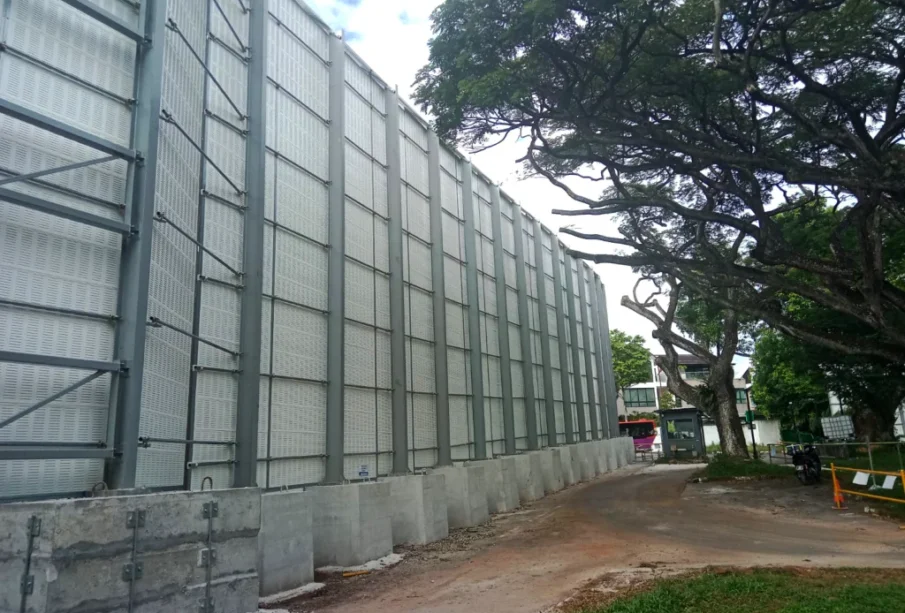
Physical barriers are another key consideration during the planning stage. Temporary hoarding and noise barriers are often included in the initial site design rather than added later.
These barriers are positioned based on predicted noise patterns from environmental modelling. The idea is to block direct sound paths and reduce the amount of noise escaping the site.
Materials used for hoarding may also be selected based on their acoustic properties. Some systems are designed not only to provide security and privacy but also to reduce sound transmission.
By planning barrier placement early, project teams can ensure that protection is in the right place from day one of construction.
Identifying High-Risk Noise Activities
Not all construction activities generate the same level of noise. Some tasks, such as piling, demolition, and heavy drilling, are known to produce significantly higher sound levels.
During the planning phase, these high-risk activities are carefully mapped out. Project teams decide when they will take place, how long they will last, and what additional controls may be needed.
In some cases, these activities are scheduled during less sensitive hours, subject to regulatory approval. In others, additional mitigation measures such as enhanced barriers or temporary enclosures are planned in advance.
This level of preparation helps avoid unexpected disruptions once work begins.
Community Impact Assessments and Communication Planning
Noise control in Singapore is not only a technical issue but also a social one. Before construction starts, developers often assess how nearby communities will be affected.
This includes identifying residential blocks, commercial areas, and public spaces that may experience noise impact. Based on this assessment, communication strategies may be developed to keep the public informed.
Some projects issue advance notices explaining construction timelines and expected noise levels. Others set up feedback channels so that concerns can be addressed quickly.
This proactive approach helps build trust and reduces frustration among residents living near construction sites.
Contingency Planning for Unexpected Noise Issues
Even with the best planning, unexpected noise issues can still arise. Weather conditions, equipment performance, or unforeseen site constraints can all affect how noise behaves.
For this reason, contingency planning is an important part of the pre-construction process. Teams may prepare additional barriers, alternative work methods, or backup equipment options in case adjustments are needed later.
Having these plans in place ensures that the project can respond quickly without significant delays or compliance issues.
Why Early Planning Makes a Real Difference
The most successful noise control strategies are those that start early. When noise is considered during the planning and design stages, it becomes much easier to manage throughout the construction process.
Instead of reacting to complaints or problems after they occur, project teams can prevent many issues from happening in the first place. This leads to smoother operations, fewer disruptions, and better relationships with surrounding communities.
In a dense and highly regulated environment like Singapore, this proactive approach is not just beneficial. It is often essential for keeping projects on track and maintaining compliance with environmental expectations.
Final Thoughts
Noise control is often seen as something that happens on site, but much of its success is determined long before construction begins. From regulatory checks and site design to equipment selection and community planning, every decision plays a role in shaping the final outcome.
By taking a structured and forward-thinking approach, construction teams can significantly reduce noise impact and create a more manageable working environment. In the long run, this benefits not only the project itself but also the people and communities living nearby.